Field notes · A meal out
Some orders tell a whole story. Ours, at a Peruvian table, ran from raw fish “cooked” in lime, through a couple of things fried until they crackled, into the wok-smoke of a Chinese-Peruvian kitchen, and finished with grape-brandy highballs and one very international cocktail. That arc — sea, fire, chifa, and pisco — is Peru on a plate. So we did the homework on everything we ate and drank: where it comes from, the stories around it, and how to enjoy each one at its best.
What we ordered
- Ceviche mixto
- Pollo chi jau kay
- Chicharrón de pescado
- Causa rellena
- Chicharrón de cerdo
- Monstruito
- Chilcano × 2
- Daiquiri
- A big bottle of water
To start: cold, bright, and Andean
The opening act of a Peruvian meal is acid, chili, and potato — three things this cuisine does like nowhere else.
Ceviche mixto
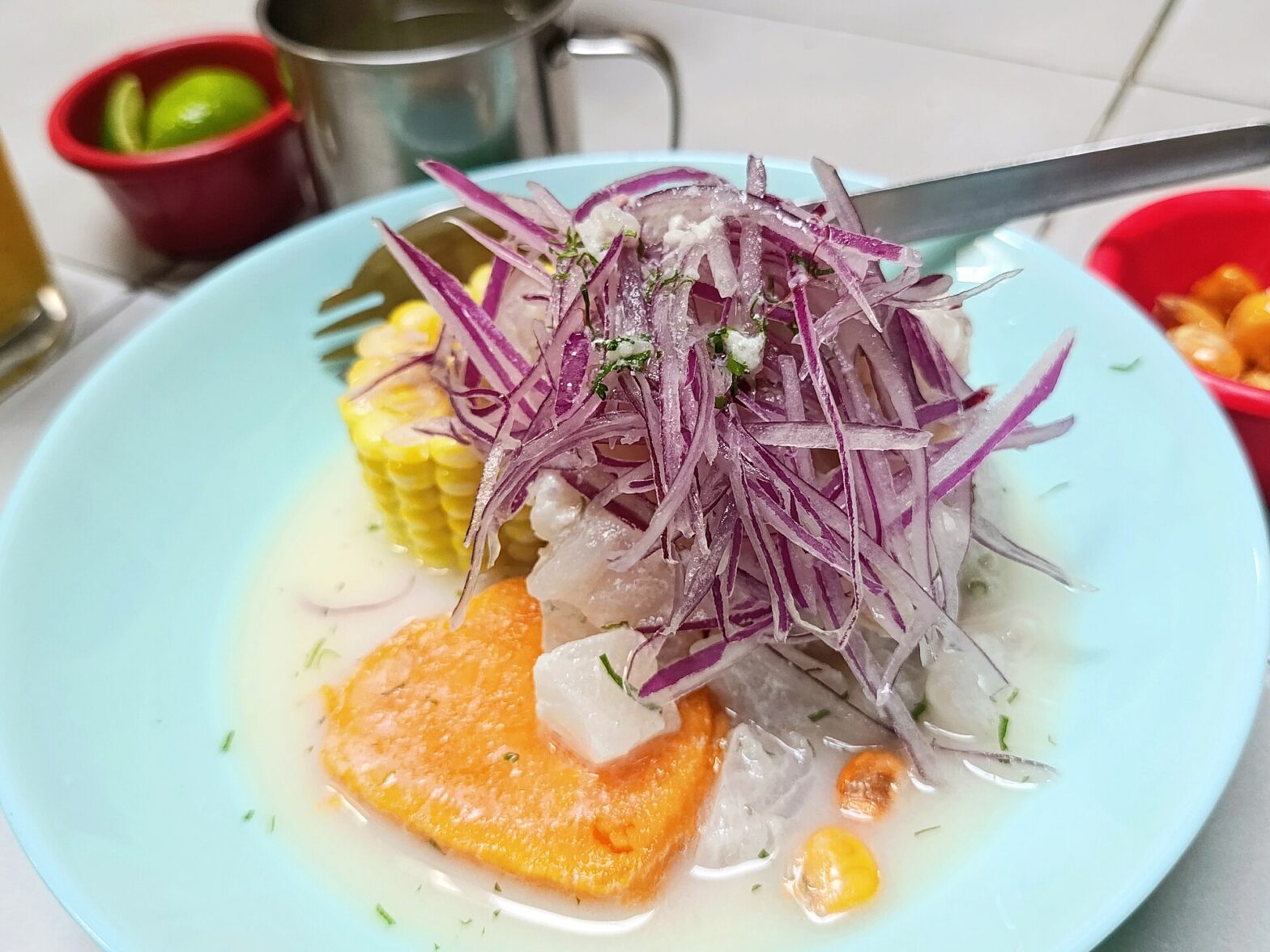
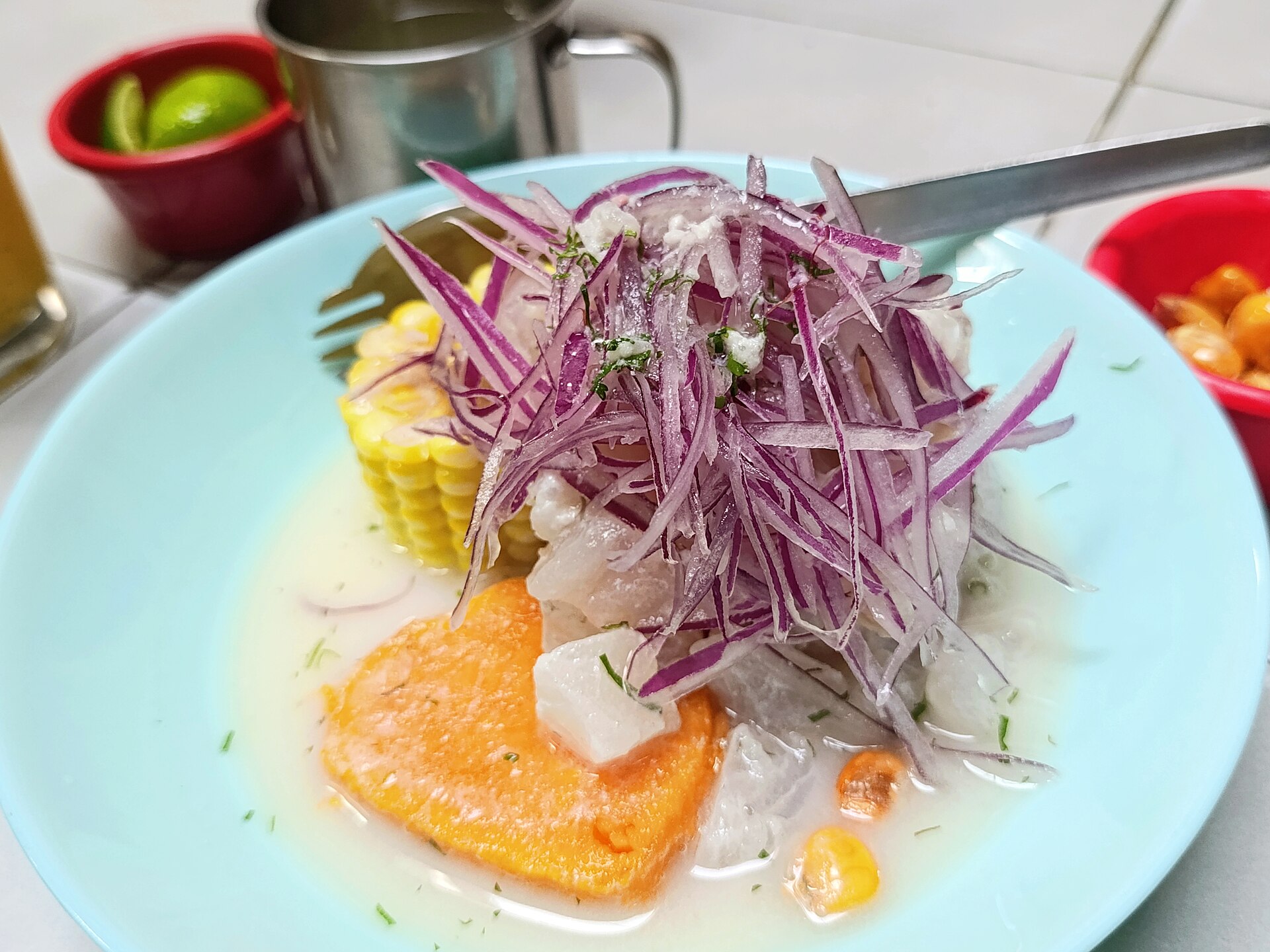
Fresh fish and mixed seafood “cooked” in lime, with red onion, ají, camote and choclo
Origin & history
Ceviche is Peru’s flagship dish, and its roots are genuinely ancient. Coastal cultures on the northern Pacific — the Moche around Huanchaco some 2,000 years ago, and possibly Caral before them — were already curing raw fish with salt and chili long before Europeans arrived. The citrus and onion that define it today came later, with the Spanish, and modern lime-cured ceviche only became a Lima staple in the last several decades. “Mixto” simply means fish plus assorted seafood — shrimp, octopus, squid, shellfish — all brightened by leche de tigre, the tangy lime-and-fish marinade pooled in the bowl.
Folklore & culture
Peru takes this seriously: ceviche is Cultural Heritage of the Nation, its traditions were added to UNESCO’s Intangible Cultural Heritage list in 2023, and June 28 is Día Nacional del Cebiche. The leche de tigre has its own legend — nicknamed levanta muertos (“raiser of the dead”), it’s the country’s beloved hangover cure and a cheeky reputed aphrodisiac.
How to enjoy it best
Fresh and at lunch — never late at night. The fish should be just-opaque and silky, not rubbery from over-marinating. Let the sweet camote and corn balance the acid and heat, and drink the leftover leche de tigre straight from the bowl (often served as a shot on the side). A cold lager or a pisco sour is the classic partner.
Did you know
That tangy pool left in the bowl is downed as a shot and sworn by across Peru as a hangover “raiser of the dead.”
Causa rellena
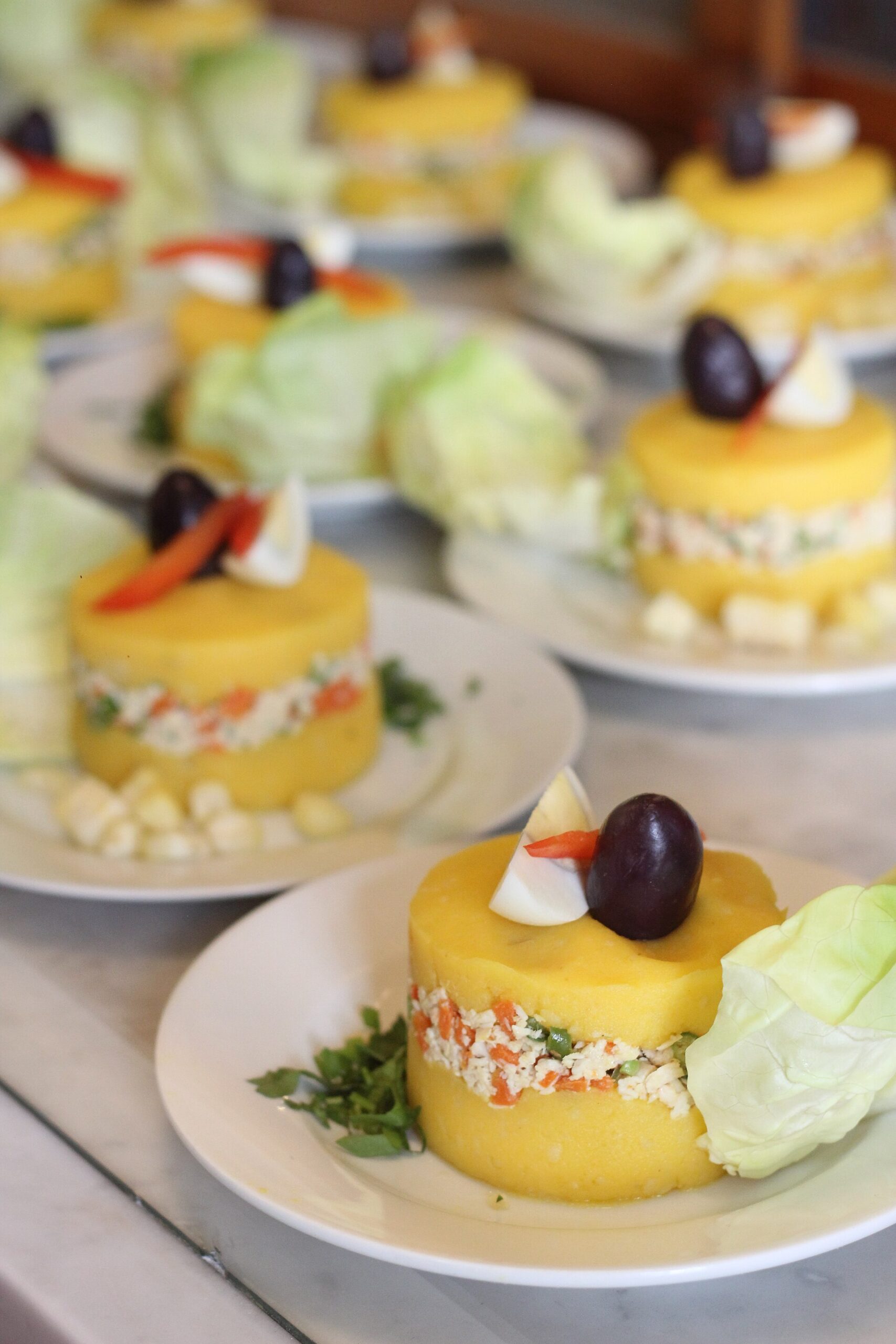
A cold, layered terrine of lime-and-ají yellow potato, stuffed with a savory filling
Origin & history
Causa is Andean at heart. Peru’s yellow potato (papa amarilla) is mashed with lime juice, ají amarillo and oil into a smooth, pliable dough, then built in layers around a filling — classically chicken or tuna, often with avocado, egg and olives, served cold like a little terrine. The potato is pre-Columbian; the citrus-bright modern form took shape in the colonial era.
Folklore & culture
Even the name carries history. One reading traces it to Quechua kausay (“sustenance, that which feeds”); the more patriotic story says it was sold “por la causa” — “for the cause” — to raise money and feed soldiers during Peru’s independence struggle and the War of the Pacific. It remains a showpiece starter at family celebrations and Fiestas Patrias tables.
How to enjoy it best
Always cold, always as an entrada. The potato should be firm enough to hold clean layers and seasoned assertively so the lime and ají sing. It’s excellent party and picnic food precisely because it keeps its shape.
Did you know
“Causa” may literally mean “for the cause” — street-sold to fund Peru’s independence army, making it a dish named after a war effort.
Peru fries everything
On the coast, chicharrón isn’t a cut of meat — it’s a verb. Cut it small, fry it crisp, and it earns the name, whether it swam or oinked.
Chicharrón de pescado
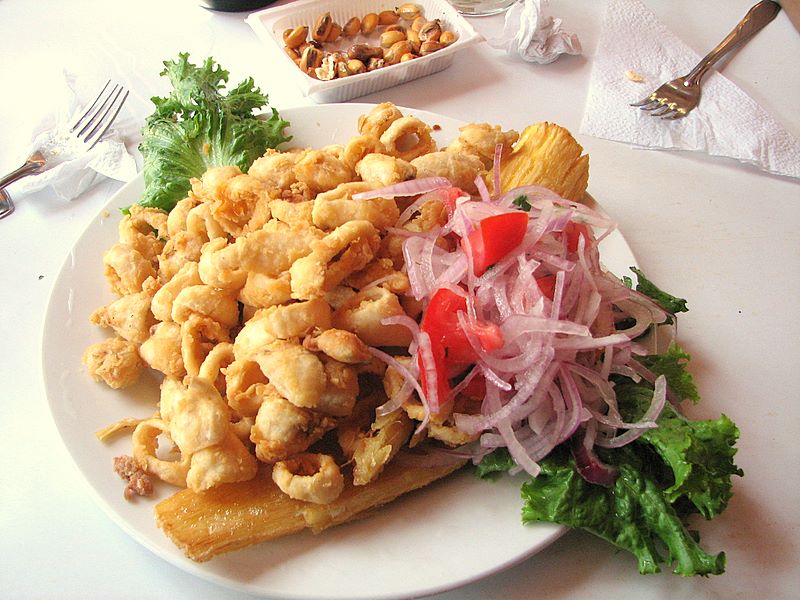
Marinated fish chunks fried golden, with salsa criolla and lime
Origin & history
Firm white fish is marinated in lime, garlic and salt, dredged, and deep-fried to a shattering crisp — the seafood cousin of the pork classic. Born of abundant Pacific fish and Spanish-introduced frying, it’s a fixture of the cevichería, usually arriving before the ceviche, and of beachside stalls that sell it in paper cones.
Folklore & culture
This is unpretentious criollo comfort food and a classic piqueo — something shareable to nibble with drinks at parties and weekend beach outings. No ceremony, just crunch.
How to enjoy it best
Hot and immediately, while the crust still crackles and the fish inside is juicy — it softens fast. Squeeze lime over it, pile on the salsa criolla to cut the richness, and reach for a cold beer.
Did you know
In Peru “chicharrón” doesn’t have to be pork at all — it’s a frying method, so the coast turns fish and squid into chicharrón as happily as the mountains do pork.
Chicharrón de cerdo
Pork simmered tender in its own fat, then fried crisp — with mote, camote and salsa criolla
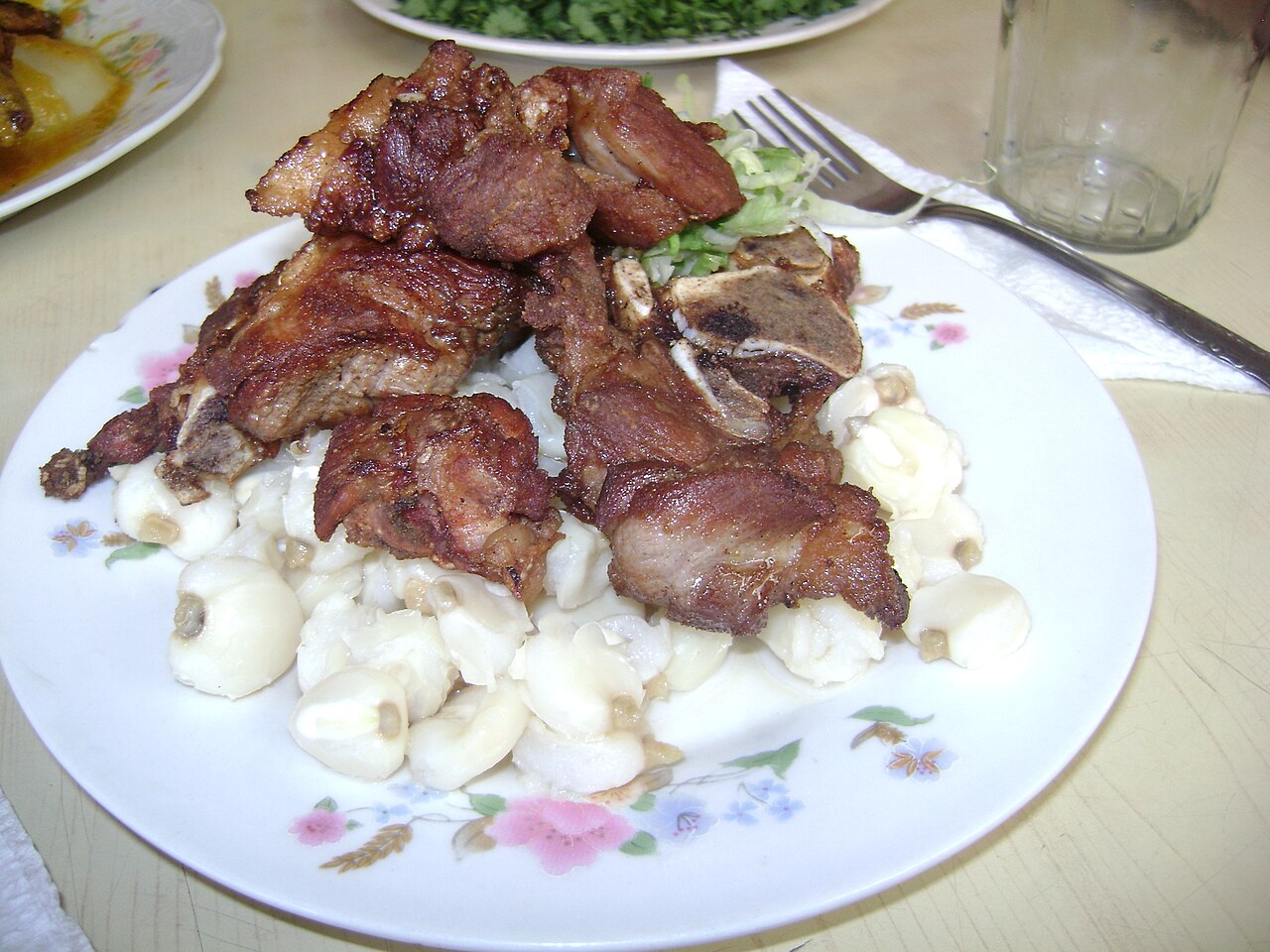
Origin & history
The original chicharrón: chunks of pork simmered in seasoned water until tender, then fried golden and crackling. Pork arrived with the Spanish and wove into Peruvian cooking through mestizaje; the dish grew out of colonial-era lard production, and Lima’s iconic pan con chicharrón — with fried camote and salsa criolla on a crusty roll — took shape around the turn of the 20th century.
Folklore & culture
It’s the cornerstone of the Peruvian Sunday desayuno criollo, eaten with tamales and coffee. Regions guard their versions proudly: Arequipa leans on ají panca and rocoto, Cusco seasons with chicha de jora, and Lima keeps the classic camote-and-salsa-criolla style.
How to enjoy it best
As a full plate with mote or choclo and plenty of salsa criolla — or, best of all, as pan con chicharrón on a Sunday morning with a coffee. A squeeze of lime keeps the richness in check.
Did you know
In a proper pan con chicharrón the layer under the pork isn’t lettuce — it’s fried sweet potato, whose sweetness is there to balance the salty, fatty meat.
Chifa: Peru’s Chinese kitchen
Two of our plates came from chifa — the Chinese-Peruvian cuisine born when Cantonese cooks met Andean pantries.
What is chifa?
Between roughly 1849 and 1874, tens of thousands of Cantonese laborers — around 95% from Guangdong — came to Peru under indenture to work the coastal plantations, guano islands and railroads. Freed from their contracts, many settled in Lima around Calle Capón, today’s Chinatown, and opened small eateries. They cooked Cantonese food with local ingredients — ají, culantro, potatoes — marrying the wok, soy sauce (sillao) and ginger (kión) to Peruvian staples. The result is chifa, a cuisine (and the word for the restaurants) so beloved it’s now a national symbol of integration. The name itself comes from Cantonese for “to eat rice / come eat.”
Pollo chi jau kay
Crispy fried chicken under a glossy, savory oyster-and-soy sauce
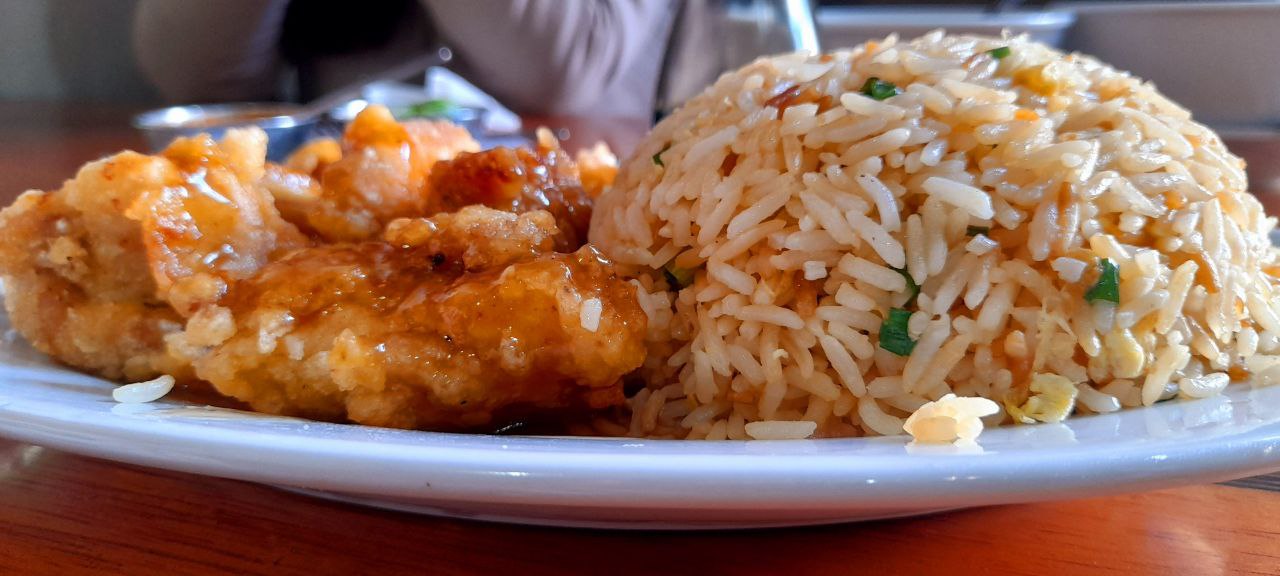
Origin & history
A chifa staple: large pieces of chicken, dredged and deep-fried, then bathed in a thick, glossy sauce built on oyster sauce, sillao and soybean paste, rounded with ginger, garlic and sesame. The name is generally traced to Cantonese si jau gai — “chicken in soy sauce.” It almost always shares the plate with arroz chaufa.
Folklore & culture
It’s one of the most-ordered proteins on any chifa menu and a fixture of the weekend family chifita. Locals keep it straight from its sweet sibling with a simple rule: chijaukay = savory (oyster/soy), while tipakay = sweet (tamarind). Same fried chicken — the sauce is the whole identity.
How to enjoy it best
Order it with arroz chaufa and eat it while the coating is still crisp, before the sauce softens it. A dab of table ají and a cold Inca Kola complete the experience; ask for the sauce aparte (on the side) if you want maximum crunch.
Did you know
Chijaukay and tipakay are essentially the same fried chicken — swap the savory oyster-soy sauce for sweet tamarind and you’ve turned one into the other.
Monstruito
A “little monster” of a plate — an oversized chifa combination
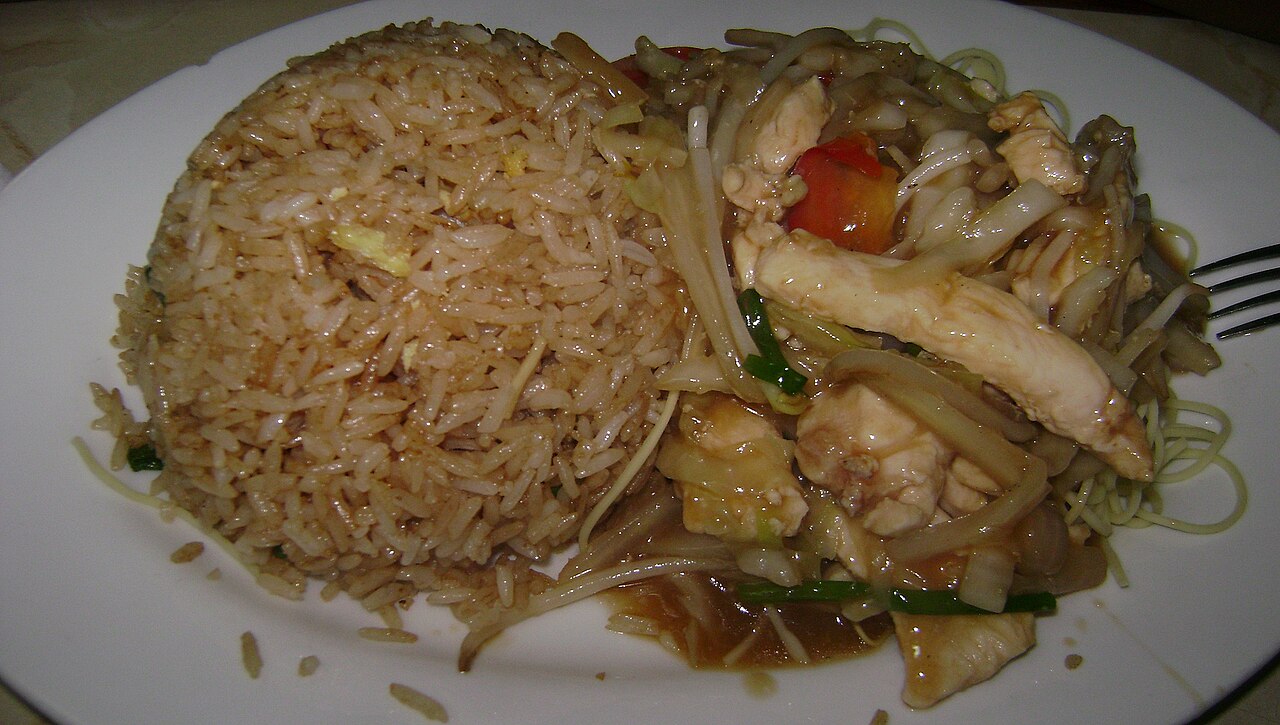
What it is (honestly)
Here’s where we keep it real: “monstruito” is a colloquial, house-by-house chifa term that isn’t well documented in reliable sources, so treat the specifics loosely. What’s clear is the type of dish — an oversized combination plate, the chifa habit of piling several things onto one plate taken to a cheerful extreme (hence “little monster”), typically some mix of arroz chaufa, tallarín saltado and frejolito chino, often with extra meats.
Its better-documented cousins
It sits in the same family as two named classics: the aeropuerto — arroz chaufa + tallarín saltado on one plate, born in 1970s Lima (folklore ties the name to the nearby Jorge Chávez airport) — and the street-food mostrito, which pairs arroz chaufa with rotisserie chicken. All of them celebrate a very Peruvian value: abundance and value from a single wok.
How to enjoy it best
Go hungry, and ideally share — the portion is the point. Douse with table sillao and ají, and if a menu lists “monstruito,” just ask the staff what’s in their version, because it varies by house.
Did you know
The name is affectionate hyperbole — a “little monster” of a plate — in the same lineage of giant Peruvian combos as the aeropuerto and the mostrito.
What we drank
Two Chilcanos, a Daiquiri, and — sensibly — a big bottle of water.
Chilcano × 2
Pisco, ginger ale, fresh lime and bitters, long over ice
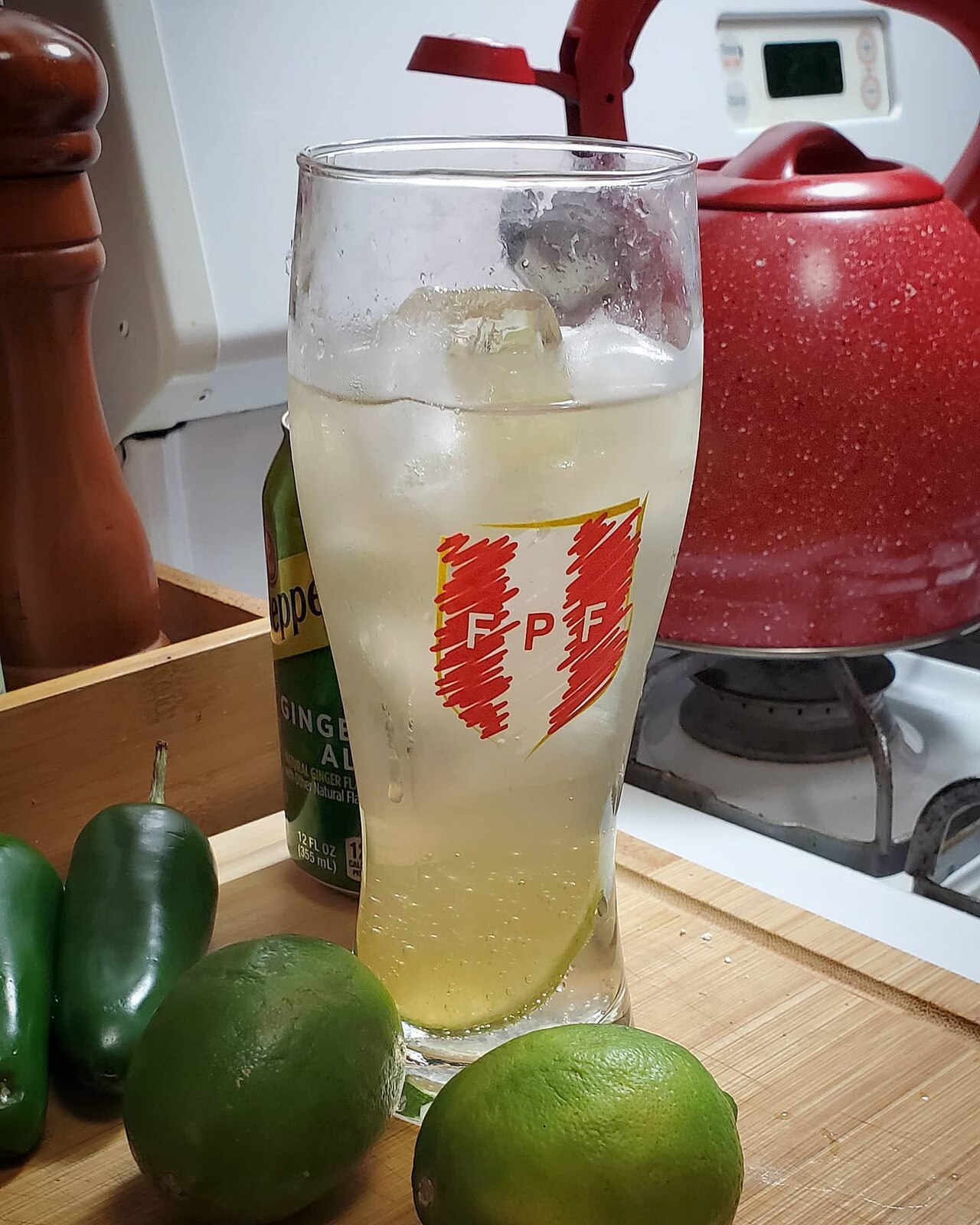
Origin & history
The Chilcano is Peru’s everyday highball — the casual cousin of the pisco sour. It traces to Italian immigrants on the coast who made a home drink called the Buongiorno (grappa, ginger ale, lime); locals swapped in pisco, and by the 1930s the modern version had settled. It was born in homes, not bars, and since 2010 Peru has celebrated a national Semana del Chilcano each January.
Folklore & culture
Its name is borrowed from chilcano de pescado, a coastal fish broth famed as a restorative — the cocktail took the soup’s name for its shared reviving reputation. Refreshing and sessionable, it’s quietly been eclipsing the pisco sour in everyday popularity (and it skips the raw egg white, which tourists appreciate).
How to enjoy it best
Build it in a tall glass over plenty of ice: about 2 oz pisco, 3–4 dashes of Angostura, the juice of a fresh lime, topped with cold ginger ale. No simple syrup, no bottled lime — just fresh. The ginger and lime cut through fried food and cool ají heat, which is exactly why two of them made sense at our table.
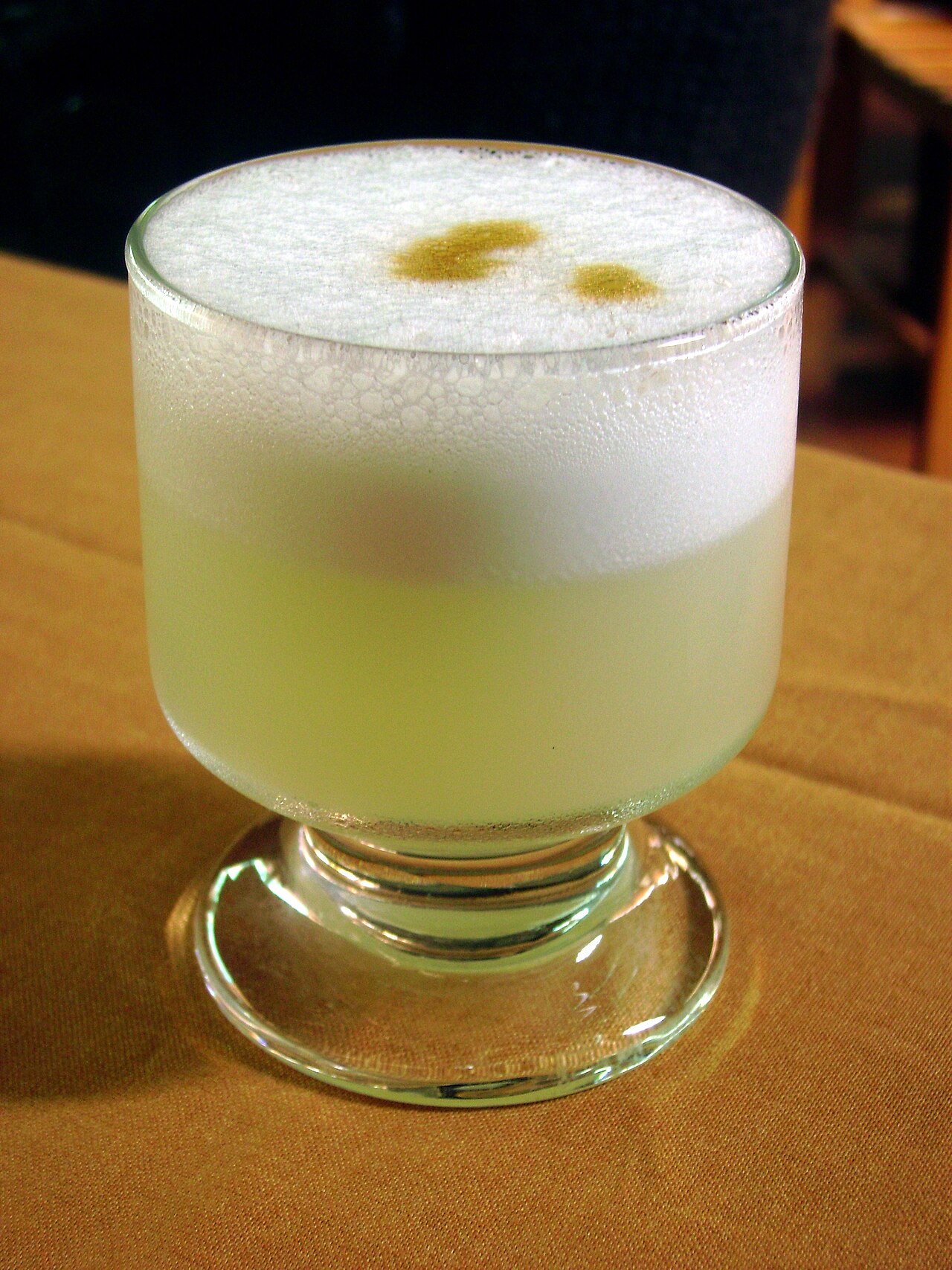
A word on pisco
Pisco is the unaged grape brandy at the heart of the Chilcano and the pisco sour, distilled on Peru’s coast since the late 1500s and named for the town and port of Pisco (from Quechua for “bird”). It’s tightly regulated — specific grapes, distilled to proof, never watered down or aged in wood — which is why it tastes so clean and grape-forward. Both Peru and Chile claim the spirit, a genuine and long-running point of national pride.
Did you know
Peru’s most “typically Peruvian” highball actually has Italian roots — it’s a reinvention of an immigrant drink, the Buongiorno.
Daiquiri
The international guest — a Cuban classic of rum, lime and sugar
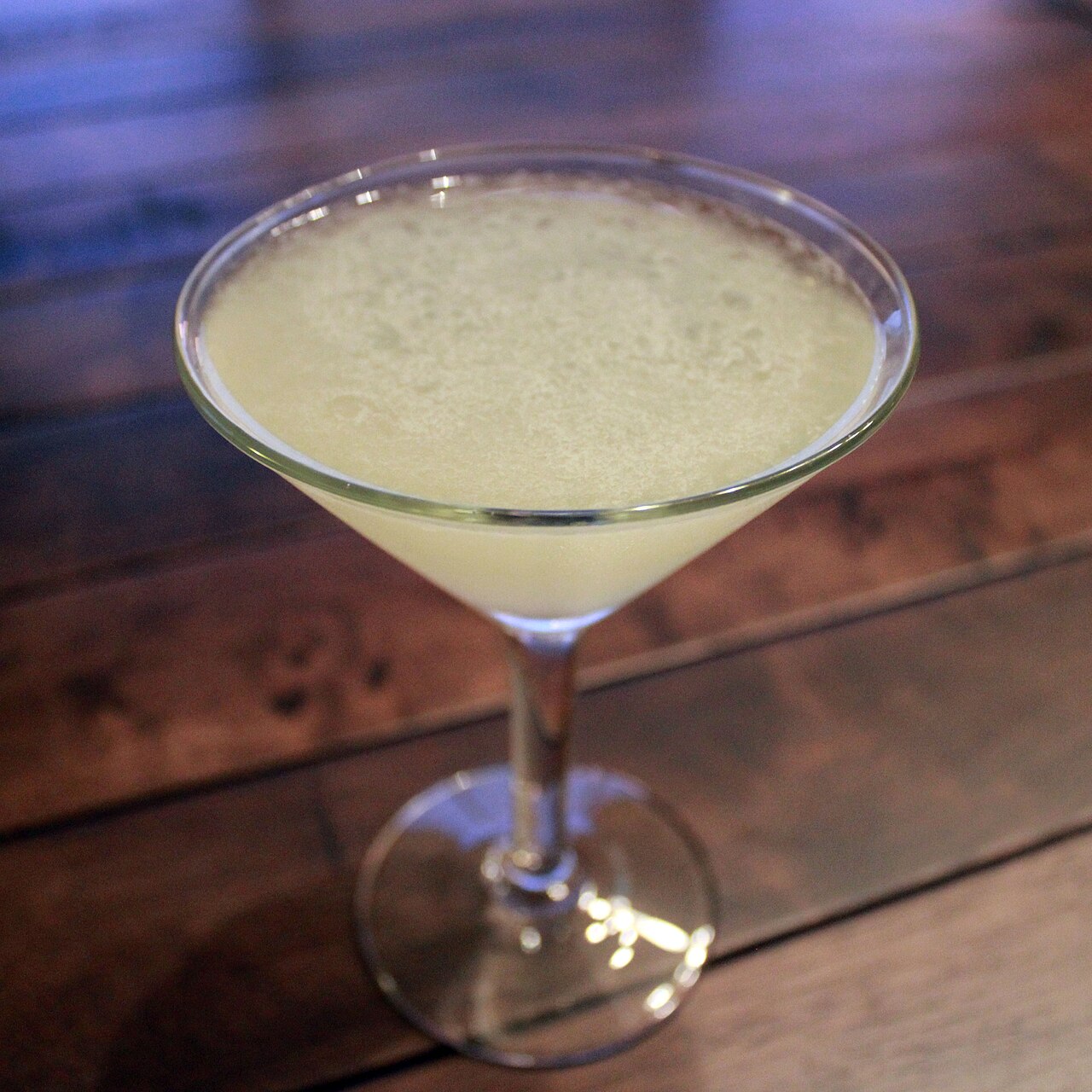
Origin & history
The odd one out at a Peruvian table, and a lovely one. The Daiquiri is Cuban — named for the mining town of Daiquirí near Santiago de Cuba, where American engineer Jennings Cox is said to have mixed rum, lime and sugar over ice around 1898. It reached the U.S. via a Navy officer in 1909 and was a fixture of American bars by the 1940s.
Folklore & culture
Its most romantic chapter belongs to Havana’s El Floridita and bartender Constantino Ribalaigua, who perfected the frozen version. Ernest Hemingway was a devoted regular; his sugarless, extra-rum “Papa Doble” is legend, and the bar still calls itself “la cuna del daiquirí” — the cradle of the daiquiri.
How to enjoy it best
The classic is shaken, not frozen: roughly 2 oz white rum, 1 oz fresh lime, ¾ oz simple syrup, shaken hard and served straight up in a chilled coupe. It should be bracingly fresh and clean — never the sweet slush of a bad beach bar.
Did you know
The Daiquiri is named after an iron-mining town — not a person or a fruit — and it was popularized in the U.S. largely by the Navy.
…and a big bottle of water
Not folklore, just good sense: between the ají, the salt, the frying and two Chilcanos, the humble botella de agua grande may be the wisest order on the list.
How to enjoy a spread like this
In Peru a meal rarely begins with food alone — it begins with people. A table like ours, plates arriving to be shared and passed family-style, is exactly the setting the cuisine is built for. Start with things para picar; anchor the meal at lunch, when ceviche is at its freshest; and don’t blink at criollo and chifa sharing one table — that plurality is Peruvian food.
And when the plates are cleared, don’t rush off. The best part is the sobremesa — lingering over the last of the drinks and the conversation. Long, fizzy, lime-and-ginger Chilcanos are made for exactly that: something to sip slowly across a whole leisurely afternoon. Sharing a table in Peru isn’t about efficiency. It’s about presence.
Image credits
- Ceviche — Juan Carlos Fonseca Mata, via Wikimedia Commons (CC BY-SA 4.0)
- Causa rellena — spersper, via Wikimedia Commons (CC BY 2.0)
- Chicharrón de pescado — Jorge Gobbi, via Wikimedia Commons (CC BY 2.0)
- Chicharrón de cerdo — Dtarazona, via Wikimedia Commons (Public Domain)
- Pollo chi jau kay — Bella Atenea (Baav), via Wikimedia Commons (CC BY-SA 4.0)
- Chifa combinado (for “monstruito”) — Dtarazona, via Wikimedia Commons (Public Domain)
- Chilcano de pisco — Monica Zorrilla Photography, via Wikimedia Commons (CC BY 2.0)
- Pisco sour — Dtarazona, via Wikimedia Commons (CC BY-SA 4.0)
- Classic daiquiri — Will Shenton, via Wikimedia Commons (CC BY-SA 3.0)